
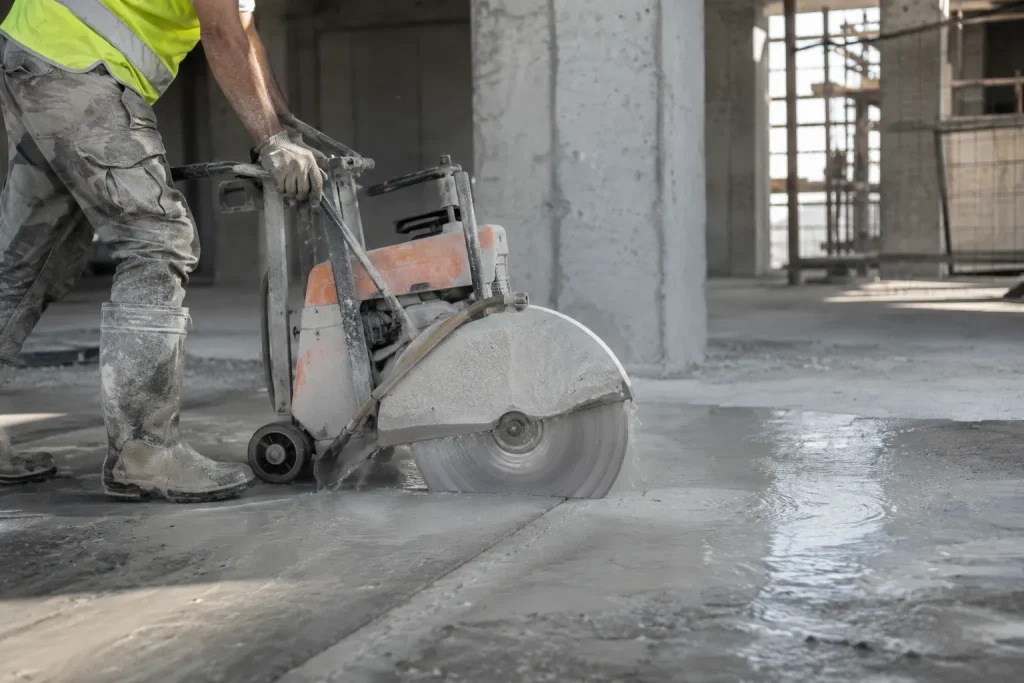
Concrete Sawing plays a critical role in modern renovation projects. Builders and property owners rely on precise cutting methods to modify existing structures without causing unnecessary damage. According to the U.S. Census Bureau, spending on private construction reached $1.68 trillion in 2025, increasing demand for efficient renovation techniques.
Modern buildings often require openings for doors, windows, plumbing systems, electrical conduits, and ventilation upgrades. Traditional demolition methods create excessive dust, vibrations, and structural stress. Concrete Sawing provides a cleaner and more controlled approach.
We have seen contractors reduce project timelines by several days through advanced sawing techniques. Diamond blade technology delivers accurate cuts while preserving surrounding materials. This precision helps maintain structural integrity and minimizes repair costs.
Professional concrete specialists use specialized equipment for floors, walls, roads, and reinforced concrete. Their expertise improves safety and productivity. As renovation standards continue evolving, concrete cutting has become an essential service for residential, commercial, and industrial projects.
Understanding the Importance of Concrete Sawing
Why Precision Matters in Renovation Work
Concrete Sawing allows contractors to make accurate openings without weakening nearby structures. Precision has become increasingly important as renovation projects involve complex mechanical and electrical installations.
Diamond blades rotate at speeds exceeding 3,000 RPM, producing smooth cuts with minimal vibration. This technology prevents cracks and reduces the risk of structural damage. The Occupational Safety and Health Administration (OSHA) also encourages dust-control practices, and wet sawing methods significantly reduce airborne silica exposure.
From our experience with renovation projects, accurate cuts simplify the installation process and prevent expensive corrections. Property owners benefit from lower labor expenses and reduced downtime.
Common applications include:
- Door and window openings.
- Pipe and utility installations.
- Expansion joints.
- Floor trenching.
- Concrete slab removal.
- Wall modifications.
These capabilities make modern cutting techniques indispensable for construction professionals.
Types of Concrete Sawing Used Today
Specialized Methods for Different Structures
Concrete Sawing includes several methods designed for specific tasks. Each technique offers advantages depending on the project requirements.
| Concrete Sawing Method | Typical Depth | Common Application |
|---|---|---|
| Wall Sawing | Up to 30 inches | Doors and windows |
| Flat Sawing | Up to 36 inches | Floors and pavements |
| Core Drilling | Up to 60 inches | Utility openings |
| Wire Sawing | Unlimited depth | Bridges and thick structures |
| Hand Sawing | Up to 10 inches | Small renovation areas |
Flat sawing represents one of the most common techniques in commercial construction. Contractors frequently use walk-behind saws equipped with diamond blades measuring between 14 and 72 inches.
Wire sawing offers exceptional versatility. Steel cables embedded with industrial diamonds can cut reinforced concrete and steel components simultaneously. We have observed wire saw systems saving significant labor hours on complex demolition projects.
Selecting the correct method improves efficiency and prevents unnecessary material waste. Start your journey with our guide to Concrete Sawing.
Benefits of Concrete Sawing in Modern Projects
Faster Completion and Improved Safety
Concrete Sawing provides several advantages compared with traditional demolition methods. Speed and precision remain two of the biggest benefits.
According to the National Institute for Occupational Safety and Health (NIOSH), silica dust exposure remains a serious concern in construction. Wet cutting systems help reduce dust levels by more than 90%, creating safer working environments.
Key benefits include:
- Minimal vibration during cutting.
- Reduced dust generation.
- Lower noise levels.
- Faster project completion.
- Greater structural protection.
- Reduced cleanup costs.
Our industry experience shows that professional sawing services can shorten renovation schedules by 15% to 25%. This efficiency allows businesses and homeowners to resume operations sooner.
Controlled cutting also reduces waste disposal expenses. Fewer damaged materials mean lower replacement costs and more sustainable construction practices.
Technology Driving Modern Concrete Cutting
Advanced Equipment Enhances Accuracy
Modern Concrete Sawing relies heavily on diamond technology and advanced machinery. Diamond blades contain synthetic diamonds capable of cutting extremely hard materials efficiently.
Hydraulic wall saws generate cutting depths exceeding 30 inches while maintaining high accuracy. Remote-controlled wire saw systems improve operator safety during challenging projects. Many machines now include electronic monitoring systems that optimize blade speed and water flow.
Industry experts recommend matching blade specifications with aggregate hardness and reinforcement density. Proper equipment selection extends blade life and improves cutting performance.
We have found that advanced machines reduce downtime and increase productivity. Contractors can complete intricate renovations with greater confidence and fewer complications.
Continuous innovation continues transforming the construction sector. New technologies provide cleaner, safer, and more precise solutions for demanding projects.
Conclusion
Concrete Sawing has become a fundamental part of modern renovation projects. Its precision, speed, and safety advantages make it superior to traditional demolition methods. Advanced cutting technologies help preserve structural integrity while reducing dust, noise, and project delays.
Professional contractors rely on specialized techniques such as wall sawing, flat sawing, core drilling, and wire sawing to meet diverse construction needs. Real-world experience shows that accurate cutting improves efficiency and lowers long-term costs. As renovation demands continue increasing, concrete cutting remains an essential solution for residential, commercial, and industrial developments. Proper planning and expert execution ensure successful projects and lasting results.