
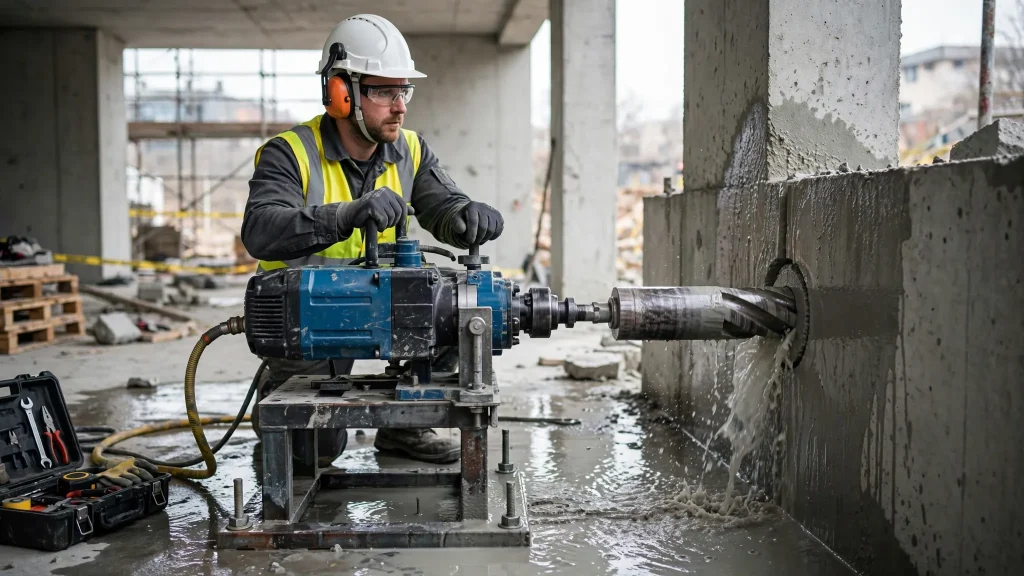
Core Drilling is one of the most accurate methods for creating clean, circular openings in concrete, brick, asphalt, and stone. Whether we are installing plumbing, electrical systems, HVAC ducts, or structural anchors, the right drilling method improves safety, precision, and project efficiency. Modern diamond core drilling produces smooth openings with minimal vibration, helping protect surrounding structures from unnecessary damage.
Many commercial and residential construction projects rely on this technique because it works across different materials and hole sizes. Contractors commonly drill openings from 12 mm to more than 600 mm in diameter, depending on project requirements. The process also supports horizontal, vertical, and angled drilling, making it suitable for new construction and renovation work alike.
Understanding how core drilling works helps property owners make informed decisions before work begins. We also reduce delays by planning each drilling location carefully and verifying hidden utilities before starting. This guide explains where core drilling is used, its advantages, and what happens before, during, and after the work. By knowing the process in advance, projects stay safer, cleaner, and more efficient from start to finish.
What Is Core Drilling and Where Is It Used?
Common Applications Across Construction Projects
Core Drilling uses a hollow, diamond-tipped drill bit that removes a cylindrical section of material instead of breaking it apart. The technique creates precise openings without producing excessive cracking or vibration. Diamond segments grind through concrete rather than hammering it, resulting in smoother finishes and greater dimensional accuracy.
We regularly use core drilling for several applications:
- Plumbing pipe installations.
- Electrical conduit routing.
- HVAC ventilation systems.
- Fire protection sprinkler lines.
- Structural anchor installation.
- Concrete testing sample collection.
The method works effectively on reinforced concrete, masonry, natural stone, brick, asphalt, and concrete blocks. Professional operators adjust drilling speed, water flow, and bit selection according to material density. Our experience shows that proper planning significantly reduces repair costs because the surrounding concrete remains intact after drilling. Accurate positioning also helps prevent conflicts with existing utilities and structural reinforcement.
Benefits of Core Drilling for Modern Construction
Precision, Safety, and Cost Efficiency
Core Drilling delivers several measurable advantages compared with traditional demolition methods. Diamond drilling generates significantly lower vibration, reducing the chance of structural damage around the drilling area. This makes it ideal for occupied buildings, hospitals, schools, and commercial facilities where minimizing disruption matters.
Key benefits include:
- Smooth and accurate circular openings.
- Reduced dust when water suppression is used.
- Lower vibration levels.
- Less structural damage.
- Faster installation preparation.
- Suitable for reinforced concrete.
Modern drilling rigs can maintain precise drilling angles while producing consistent hole diameters. Because the process removes only the required material, cleanup becomes easier and material waste decreases. We also find that projects requiring multiple service penetrations benefit from improved scheduling since drilling crews complete work efficiently without extensive surface repairs afterward.
| Feature | Core Drilling | Traditional Breaking |
|---|---|---|
| Hole Accuracy | High | Moderate |
| Surface Damage | Minimal | High |
| Dust Production | Low with water | High |
| Noise Level | Lower | Higher |
| Reinforcement Handling | Excellent | Difficult |
| Finish Quality | Smooth | Rough |
What to Expect Before Core Drilling Begins
Planning, Safety Checks, and Equipment
Successful Core Drilling begins long before the drill touches the concrete. Every project should start with a detailed site assessment. We inspect structural drawings whenever available and use reinforcement scanners to identify steel bars, embedded services, and electrical conduits hidden within the concrete.
Before drilling starts, professionals typically complete these steps:
- Review construction drawings.
- Locate electrical and plumbing services.
- Mark drilling positions.
- Select the correct drill bit diameter.
- Secure the drilling rig.
- Establish water management and debris control.
Diamond drilling equipment includes powerful electric or hydraulic motors, vacuum bases or anchor systems, water supply connections, and specialized diamond bits. Water cools the cutting surface while reducing airborne silica dust. Our field experience shows that careful preparation saves valuable project time because unexpected utility strikes and equipment adjustments become far less common during execution.
Choosing a Professional Core Drilling Service
Experience Makes the Difference
Selecting an experienced contractor directly affects project quality and safety. Professional operators understand drilling speeds, equipment calibration, reinforcement handling, and material behavior. They also follow local construction standards while maintaining proper safety procedures throughout the job.
When comparing contractors, consider these factors:
- Industry experience.
- Modern diamond drilling equipment.
- Licensed and insured workforce.
- Safety procedures.
- Project references.
- Clear project timelines.
Experienced drilling teams also know how to minimize disruption in occupied buildings by controlling noise, vibration, and water usage. We recommend discussing hole sizes, drilling depth, access limitations, and project schedules before work begins.
Clear communication helps prevent misunderstandings and ensures every opening meets engineering specifications without requiring costly corrections later. Explore our latest insights on why concrete sawing is essential for Modern Renovation Projects.
Conclusion
Core Drilling remains one of the safest and most precise methods for creating openings in concrete and masonry structures. Its accuracy, low vibration, and clean finish make it the preferred choice for residential, commercial, and industrial construction. Proper planning, professional equipment, and experienced operators all contribute to successful outcomes.
By understanding the complete process before work begins, property owners and contractors can reduce risks, improve efficiency, and protect existing structures. Choosing qualified professionals ensures every drilled opening meets project requirements while supporting long-term structural performance and reliable installation results.